RSI Motors
Precision Gear Motor technology sits quietly inside robotic joints, medical pumps, laboratory instruments, and automated production lines. Its value appears in small details: a stable output shaft, low backlash, controlled noise, and repeatable motion after thousands of cycles. These details separate a dependable drive from a cheaper motor that only performs well during initial testing.
As Dr. Fritz Faulhaber, a recognized pioneer in miniature drive technology, stated, “The smaller the drive, the greater the challenge.” This principle still describes the modern Precision Gear Motor market. Compact dimensions often demand tighter tolerances, stronger materials, better thermal management, and more careful assembly. Not every manufacturer handles these demands equally.
This guide examines ten leading Precision Gear Motor manufacturers worldwide. The comparison considers engineering capability, gear quality, motor efficiency, customization, production consistency, and application support. It also reviews practical factors, including continuous torque, reduction ratios, ingress protection, operating temperature, and service life. Numbers matter. Field experience matters more.
No ranking is perfect.
A supplier may excel in robotics but provide limited support for medical equipment. Another may offer excellent customization while carrying longer lead times. These differences can change the best choice for a specific project. We therefore avoid judging manufacturers through marketing claims alone. Technical documents, application examples, certifications, and customer feedback deserve closer attention. Some information also changes over time, so readers should verify current specifications before purchasing.
The following overview is designed for engineers, procurement teams, and system integrators. It offers a practical starting point, not a final verdict. Real performance depends on load, duty cycle, alignment, lubrication, and installation quality. A precise motor cannot correct an imprecise system.
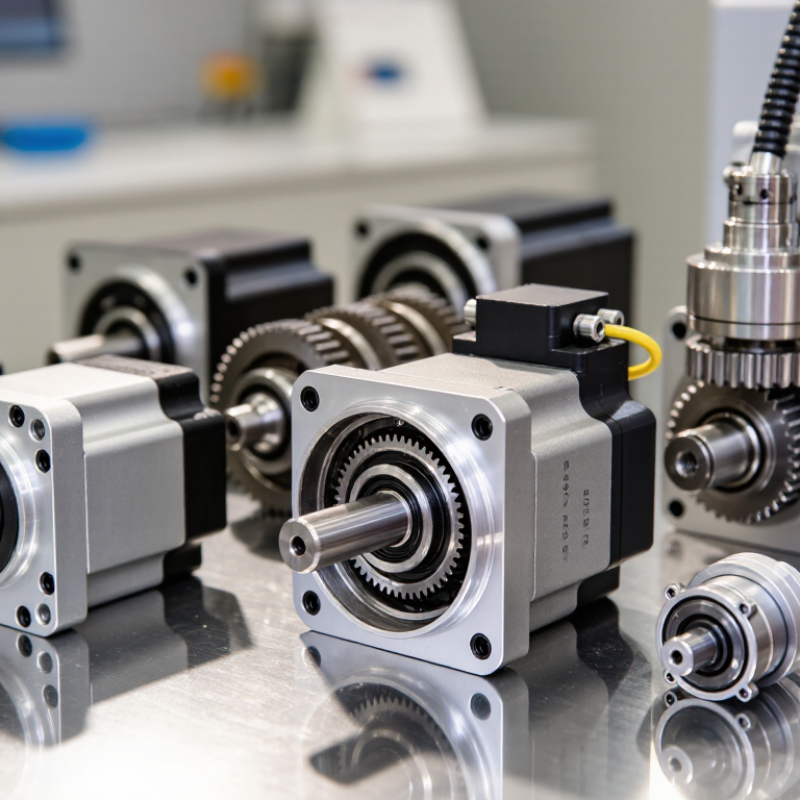
Precision gear motors are judged by more than brand visibility. Their internal design, torque delivery, and verified efficiency matter more. Common types include planetary, helical, bevel, and worm gear motors. Planetary units suit compact systems requiring high torque density. Helical and bevel designs usually provide smoother transmission and better efficiency. Worm gear motors offer strong reduction ratios, but their sliding contact can create more heat.
Torque ranges vary widely, from small fractional-newton-meter drives in instruments to several thousand newton-meters in conveyors and industrial machinery. The correct choice depends on starting torque, continuous load, speed, duty cycle, and shock conditions. A motor rated for peak torque may still fail under continuous overload. That distinction is often missed.
IEC 60034 efficiency classes help compare motor performance, including IE1, IE2, IE3, and IE4 levels. Higher classes generally reduce electrical losses, especially during long operating hours. However, the gearbox adds its own losses, so the complete gear motor should be evaluated. Request test data, thermal limits, service factors, and operating-point efficiency from manufacturers. Catalog figures can look precise. Real installations are less predictable.
Tips: Match the gear ratio to the required output speed, not only the motor’s rated power. Check noise, backlash, mounting position, and ambient temperature. Measure actual load behavior when possible. A small field test can challenge a confident specification.
The chart shows representative continuous output-torque envelopes commonly available across industrial precision gear-motor categories. Actual ratings vary with frame size, reduction ratio, duty cycle, thermal limits, backlash, and application requirements.
Planetary, helical, bevel-helical, worm, harmonic, and cycloidal designs cover overlapping torque ranges. Planetary and harmonic units are widely used where compact size, positioning accuracy, and low backlash are important, while cycloidal and bevel-helical units are commonly selected for higher torque transmission.
IEC 60034-30-1 defines IE efficiency classes for line-operated, single-speed AC motors. IE1 is Standard Efficiency, IE2 High Efficiency, IE3 Premium Efficiency, and IE4 Super Premium Efficiency. The applicable minimum efficiency depends on rated output, pole count, and motor operating conditions; the efficiency class does not define the gearbox torque range.
Ranking the top ten precision gear motor manufacturers in 2024 requires more than comparing sales. Audited revenue provides scale, but accuracy, torque density, and service coverage reveal engineering strength. Grand View Research reports that the global gear manufacturing market is expanding at a mid-single-digit annual rate through 2030. Demand remains strongest in robotics, automation, medical equipment, and electric mobility.
Revenue matters. Still, it can mislead. A diversified manufacturer may report large sales while its precision motor division remains modest. I would therefore combine 2024 company filings with application-level evidence. Backlash below 10 arcminutes, repeatable positioning, and high continuous torque per kilogram deserve serious weight. Thermal performance also matters. A compact motor that overheats during an eight-hour production shift is not truly efficient. Not on paper.
Global reach separates the strongest candidates from technically capable challengers. The International Federation of Robotics recorded 541,302 industrial robot installations in 2023, confirming sustained demand for precise motion systems. A leading supplier should support that demand through regional testing, spare-parts inventory, and engineers near major manufacturing clusters. ISO 9001 certification helps, but it does not prove low backlash or long service life. My ranking would assign 30% to 2024 revenue, 25% to accuracy, 25% to torque density, and 20% to global reach. The weighting is debatable. Public data is uneven, and some manufacturers disclose impressive specifications without independent endurance results.
The leading ten manufacturers compete through gear technologies, product breadth, and regional service. Their portfolios usually include planetary, harmonic, helical, worm, and cycloidal gear motors. Planetary designs suit compact automation, while cycloidal units tolerate shock loads. Harmonic systems deliver high reduction ratios in robotic joints, but they can cost more.
Product lines now extend beyond motors. Suppliers offer integrated drives, encoders, brakes, controllers, and application software.
The International Federation of Robotics reported 541,302 industrial robots installed worldwide in 2023. That demand favors manufacturers with tested motion platforms, not only efficient motors. Buyers should check backlash, thermal capacity, noise, sealing, and continuous torque. Datasheets can look impressive. Field performance may differ.
Regional coverage separates strong suppliers from merely visible ones. European manufacturers often emphasize engineered customization and strict testing. East Asian producers provide broad volumes and dense component ecosystems. North American operations commonly focus on automation integration, local inventory, and after-sales engineering. The International Energy Agency estimates electric motors consume roughly half of global electricity, increasing pressure for efficient gear systems. Market reports still use different definitions of “precision gear motor,” so ranking accuracy remains imperfect. A reliable comparison should verify certification, service response, replacement-part access, and actual load-cycle data across factories, warehouses, and medical equipment.
Robotics and automation are strengthening demand for precision gear motors from 2024 to 2030. The International Federation of Robotics reported 541,302 industrial robot installations in 2023, up 10% year on year. It also expects global installations to approach 600,000 units in 2024. Each robotic joint needs controlled torque, repeatable positioning, and stable operation during long production cycles.
Demand is practical. The MarketsandMarkets Gear Motor Market outlook projects mid-single-digit annual growth through 2030. Material handling, collaborative robotics, packaging, and automated inspection are important users. These systems often require compact planetary or harmonic drives, low backlash, and efficient thermal management. A motor running beside a conveyor may face dust, vibration, and thousands of reversals each day.
For a worldwide top-ten comparison, buyers should examine measured torque density, noise, efficiency, service life, and delivery capability. Published specifications are useful, but factory test data matters more. Engineers should request load-cycle results at actual temperatures. Small errors matter. A gearbox rated for peak torque may still fail under repeated shock loads. Forecasts are not promises, either. Energy prices, chip shortages, and slower capital spending could weaken the 2024–2030 curve. That risk deserves more attention than glossy growth charts.
Choosing a precision gear motor requires more than comparing torque and price. ISO 1328 accuracy grades reveal gear tooth deviation, backlash, and transmission consistency. Higher accuracy usually supports smoother motion, but it may increase cost and inspection time. IP ratings also matter. An IP65 motor resists dust and low-pressure water jets, while IP67 adds temporary immersion protection. These ratings do not prove chemical resistance or long-term outdoor reliability.
Service life should be assessed under real loads, not catalog promises. Check duty cycle, ambient temperature, lubrication intervals, bearing calculations, and expected starts per hour. The International Federation of Robotics reported 541,302 industrial robot installations in 2023. This growth increases demand for repeatable, compact motion systems. However, robot usage data does not guarantee a motor’s service life. I would request test conditions, measured backlash, and documented endurance results.
Tips: Ask for ISO 1328 inspection records and the declared accuracy grade. Confirm the complete motor’s IP rating, not only the gearbox housing. ISO 9001 certification indicates controlled quality processes, but it does not certify product precision. The ISO Survey reports more than one million ISO 9001 certificates worldwide, so certification alone is not a strong differentiator. Review corrective-action records, calibration methods, and traceability. A perfect scorecard is unrealistic. Field experience still exposes weaknesses that laboratory reports can miss.
Common types include planetary, helical, bevel, worm, harmonic, and cycloidal designs. Planetary units fit compact systems needing high torque density. Helical and bevel models usually transmit motion smoothly. Worm units provide strong reduction but may produce more heat.
Check starting torque, continuous load, speed, duty cycle, and shock conditions. Small instruments may need fractional-newton-meter torque. Conveyors can require several thousand newton-meters. Peak torque is not continuous torque. This mistake can damage equipment.
Match the ratio to the required output speed, not only motor power. A high-power motor can still run too quickly. For example, a slow conveyor needs controlled output speed and sufficient starting torque. The ratio should support the real load cycle.
These are motor efficiency classes under IEC 60034. Higher classes generally reduce electrical losses during long operating periods. However, gearbox losses still matter. Evaluate the complete gear motor, not only the motor rating.
Request test data, thermal limits, service factors, and efficiency at the operating point. Also check backlash, noise, sealing, mounting position, and ambient temperature. Catalog figures look exact. Real installations are less tidy.
Measure actual load behavior when possible. Record current, temperature, speed, noise, and operating time. A small field test can challenge a confident specification. One test is helpful, but not perfect.
Planetary designs suit compact automation with high torque density. Harmonic systems provide high reduction ratios for robotic joints. Cycloidal units can tolerate shock loads. Cost, backlash, thermal capacity, and continuous torque still require careful comparison.
Service response, local inventory, engineering support, and replacement-part access affect total downtime. A technically strong unit may become inconvenient without support. Check these details across actual factories, warehouses, or medical equipment sites. Visibility alone proves little.
This guide explores the essential role of the Precision Gear Motor in modern motion-control systems, covering major motor and gearbox types, typical torque ranges, and IEC 60034 efficiency classes. It also presents a structured comparison of ten leading global manufacturers based on 2024 revenue indicators, positioning accuracy, torque density, product reliability, and international service coverage. Rather than focusing only on rankings, the article explains how different gear technologies and product families support diverse industrial requirements.
The discussion highlights growing demand from robotics, factory automation, logistics equipment, and other smart manufacturing applications, while outlining key market growth indicators for 2024–2030. It also provides practical selection criteria, including ISO 1328 gear accuracy, IP protection ratings, expected service life, thermal performance, maintenance needs, and ISO 9001 quality management compliance. These factors help engineers and purchasing teams identify efficient, durable, and application-appropriate solutions.