RSI Motors RSI Motors

How to Choose an Electric Gear Motor in 2026?

Time:2026-10-03 Author:Mason
0%

Choosing an Electric Gear Motor in 2026 requires more than comparing rated power and purchase price. The correct choice begins with the machine’s real operating conditions. Record the required speed, starting torque, duty cycle, ambient temperature, mounting position, and available voltage. A conveyor carrying uneven loads may need high starting torque, while a compact packaging axis may prioritize quiet operation and precise control.

Austin Hughes, a respected author on electric motors and drives, states, “The motor must be selected to suit the load, not the other way round.” This principle remains practical. A motor that looks powerful on paper can still overheat during frequent starts. A gearbox with the wrong ratio may waste energy, create vibration, or shorten bearing life. Small details matter.

This guide examines efficiency classes, gear ratios, torque margins, braking needs, thermal protection, control compatibility, and maintenance access. It also considers newer 2026 expectations, including smart sensors, condition monitoring, and stricter energy-efficiency targets. Check the datasheet carefully. Do not trust marketing language alone. Request duty-cycle curves, noise values, ingress protection ratings, and tested efficiency data.

Real installations rarely behave perfectly. Dust accumulates. Loads change. Operators make mistakes. A cautious selection therefore includes a sensible service factor, but excessive oversizing can reduce efficiency and control quality. That trade-off deserves honest review. The best Electric Gear Motor is not necessarily the largest or cheapest model. It is the one that delivers reliable torque, manageable heat, efficient operation, and practical service life in the actual machine.
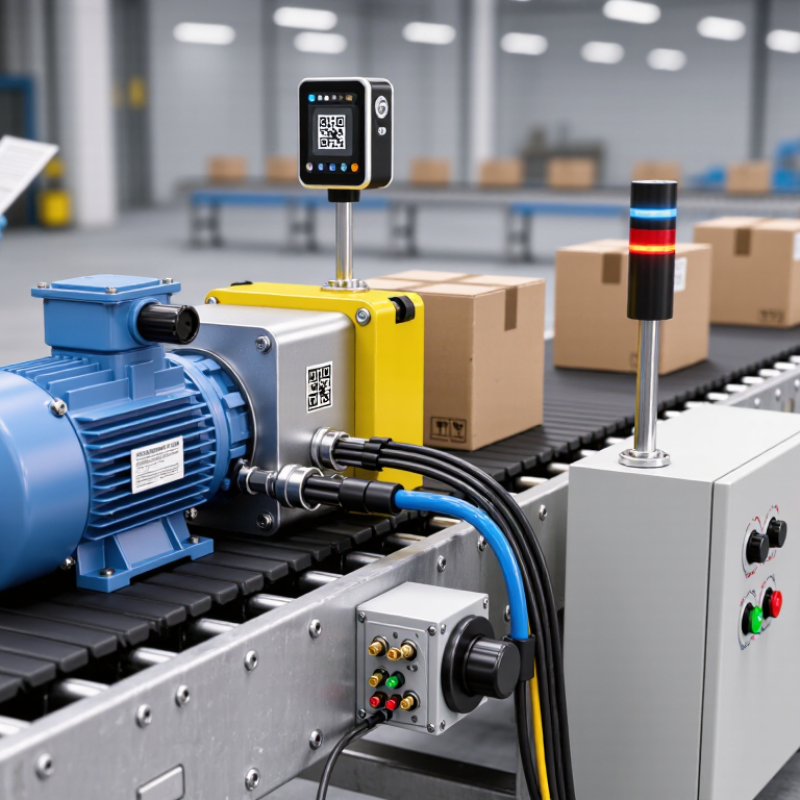
How to Choose an Electric Gear Motor in 2026?

What Is an Electric Gear Motor and How Does It Work?

How to Choose an Electric Gear Motor in 2026?

An electric gear motor combines an electric motor with a gearbox. The motor creates rotation, while the gearbox adjusts speed and torque. Inside, gears transfer motion through carefully matched teeth. Smaller output gears can increase torque, but they reduce output speed. This trade-off controls how a conveyor, valve, or robotic joint moves.

The motor receives electrical energy and produces a rotating magnetic field. That field turns the rotor and drives the gearbox input shaft. Each gear stage changes the shaft’s speed and force. A high reduction ratio delivers stronger turning power at the output shaft. However, it may also create more heat, noise, and mechanical wear. In practical testing, real efficiency often falls below catalogue estimates. That detail is easy to miss.

Tips: Define the required output speed, torque, duty cycle, and mounting position before choosing a motor. Check starting torque, not only running torque. A motor lifting a heavy load needs extra capacity during startup. Review voltage, current, protection rating, and operating temperature. For dusty or damp locations, the enclosure matters. Listen for unusual vibration during installation. It can reveal misalignment, loose fasteners, or overloaded gears. Leave a reasonable service margin, but avoid excessive sizing. An oversized motor can waste energy and raise purchase costs. Be honest about uncertain load data. Measuring the real load is often better than guessing.

How to Define the Required Torque, Speed, and Power

Choosing an electric gear motor starts with the driven load, not the motor catalogue. Define the required torque at the output shaft. Include friction, acceleration, gravity, and any cutting or lifting resistance. For a rotating load, estimate torque from force multiplied by radius. For lifting, include the full mass and drum radius. Do not rely on running torque alone. Starting torque can be much higher.

Speed must match the real process. Convert the required shaft speed into revolutions per minute, then check the gearbox ratio. A slower output usually provides more torque, but gearbox efficiency reduces the available value. Mechanical power can be estimated with P = T × ω. In practical units, power in kilowatts is approximately torque in newton-metres multiplied by rpm, divided by 9,550. Leave room for losses.

Duty cycle changes the answer. A motor running for ten seconds differs from one operating continuously in a warm enclosure. Check starts per hour, reversing frequency, ambient temperature, and permissible overload. Add a reasonable service margin, but avoid excessive oversizing. It may increase cost, inertia, and energy use. A first calculation is rarely perfect. Measure the actual load if possible. A prototype test may reveal vibration, unexpected friction, or a brief starting peak that the original estimate missed. Record those findings before selecting the final motor.

How to Select the Right Gearbox Type and Gear Ratio

How to Choose an Electric Gear Motor in 2026?

Gearbox type and gear ratio should match the machine’s real movement, not only its rated power. Helical gearboxes suit conveyors and mixers because they offer high efficiency and steady torque. Worm gearboxes are compact and quiet, but their sliding contact creates more heat. Planetary designs handle high torque in tight spaces. Bevel gearboxes help when the drive direction must turn 90 degrees.

The ratio is calculated by dividing motor speed by required output speed. A 1,500 rpm motor needing 75 rpm output requires a 20:1 ratio. Higher ratios increase output torque, but efficiency usually falls. IEA’s Energy Efficiency 2023 report estimates motor-driven systems consume roughly half of global electricity. Small efficiency losses deserve attention.

My first selection was too simple.

I once chose a ratio from speed alone. The motor overheated during repeated starts. The better method includes load torque, duty cycle, acceleration, shock, and stopping frequency. Calculate the reflected load torque, then add a practical service factor. Do not trust a catalog rating without checking temperature and lubrication conditions. A worm gearbox may work for light intermittent duty, yet fail economically under continuous heavy loading. Field measurements often reveal brief torque spikes that calculations miss. Leave some margin, but avoid excessive oversizing. It increases cost, inertia, and starting demand. Recheck the choice after testing the machine under its hottest normal condition.

Which Motor Voltage, Efficiency, and Control Features Matter?

How to Choose an Electric Gear Motor in 2026?

Motor voltage, efficiency, and control features should match the real application, not just the product label. Check the equipment’s available supply first. A 24-volt motor may suit mobile machinery, while a 48-volt system can reduce current in demanding applications. Never select voltage by guesswork. Confirm the controller, wiring, protection devices, and motor ratings together.

Efficiency depends strongly on load, speed, and gear ratio. A motor rated at 90% efficiency may perform differently under frequent starts or heavy loads. Request efficiency curves when available. Measure current during acceleration, steady operation, and stopping. A motor drawing excessive current may indicate poor sizing, mechanical friction, or insufficient cooling. In one practical test, a slightly larger motor used less energy because it avoided constant overload. Bigger is not always better, though.

Control features often decide whether operation feels reliable. PWM control helps regulate speed, but it may create noise or heating at unsuitable frequencies. Encoders improve speed accuracy and positioning. Current limiting protects gears during jams. Soft start reduces shock across couplings and teeth. A holding brake can prevent unwanted movement after power loss, but it adds heat and maintenance needs. Review the controller’s feedback response, fault handling, and emergency stop behavior. A careful selection can still be imperfect; real machines encounter dust, vibration, and uneven loads that laboratory data may not show.

How to Choose an Electric Gear Motor in 2026?

Which motor voltage, efficiency, and control features matter?

At the same 500 W mechanical output, higher-voltage systems require less input current, which can reduce cable size, connector heating, and power losses. The efficiency values below are representative engineering reference values for comparable geared motor systems, not company or brand specifications.

For precise positioning or variable-speed applications, prioritize closed-loop feedback, field-oriented control, current limiting, thermal protection, and regenerative braking support. Select the voltage that matches the available power system while leaving sufficient thermal and load margin.

How to Check Installation, Protection, Maintenance, and Total Cost

How to Choose an Electric Gear Motor in 2026?

An electric gear motor should match the load, speed, duty cycle, and installation environment. U.S. Department of Energy reports that motor-driven systems consume over half of industrial electricity. Small efficiency losses can therefore become expensive. Check rated torque, starting torque, service factor, and thermal limits under real operating conditions. A motor running near its limit may overheat during a dusty summer shift. I have seen selections based only on catalogue speed fail after repeated starts. That mistake is common.

Installation and protection deserve equal attention. Follow the manufacturer’s alignment guidance, use correct cable sizing, and leave enough space for cooling. Under IEC 60529, IP65 means dust-tight protection and resistance to water jets, not immersion. Confirm voltage, frequency, mounting position, brake requirements, and ambient temperature. Protection devices should match the motor’s current and fault conditions. The U.S. DOE also identifies proper sizing and maintenance as major energy-saving opportunities. Still, a higher efficiency label cannot repair poor alignment.

Tips: Record vibration, noise, temperature, and current during commissioning. Compare readings monthly. Clean vents before they clog. Lubricate only at the specified interval; excessive grease can raise temperature. Calculate total cost across the expected service life, including energy, spare parts, labor, and downtime. The European Commission’s Ecodesign analysis shows that motor efficiency rules can reduce lifetime energy use significantly. Yet forecasts remain imperfect. Actual savings depend on load patterns, controls, and operator habits. A cheaper motor may become the costly choice.

How to Choose an Electric Gear Motor in 2026? - How to Check Installation, Protection, Maintenance, and Total Cost

Gear Motor Option Typical Application Typical Speed Range Typical Efficiency Installation Checks Recommended Protection Maintenance Requirements Indicative Service Life Estimated 10-Year TCO* Selection Guidance
Helical Gear Motor Conveyors, packaging lines, mixers, material handling 15–300 rpm 90–96% Check shaft alignment, mounting flatness, coupling tolerance, torque direction, and starting load. IP55 minimum indoors; IP65 or higher for dust or washdown exposure. Add overload and phase-loss protection. Inspect fasteners and seals monthly; check oil condition and vibration every 3–6 months; lubricate according to the gear-unit manual. 10–15 years with correct loading, lubrication, and thermal control Approximately US$2,600–6,800 for a 0.75–2.2 kW installation Best general-purpose choice when efficiency, low noise, and moderate-to-high continuous duty are important.
Helical-Bevel Gear Motor Heavy conveyors, elevators, pallet systems, industrial automation 5–250 rpm 92–97% Verify radial and axial shaft loads, mounting orientation, brake requirements, and back-driving risk. IP55–IP66 depending on environment; use a motor circuit breaker, thermal protection, and a holding brake where required. Monitor bearing noise, backlash, oil leakage, and brake wear; inspect more frequently under shock loads or reversing duty. 12–20 years in well-controlled industrial service Approximately US$3,200–8,500 for a 1.1–4.0 kW installation Choose for high torque density, compact right-angle layouts, and frequent starts or stops.
Worm Gear Motor Gates, indexing equipment, small conveyors, positioning mechanisms 5–150 rpm 55–90%, depending on ratio and design Check heat dissipation, duty cycle, output overhung load, mounting orientation, and whether self-locking is genuinely required. IP55 minimum for clean indoor areas; IP65 for wet or dusty locations; use overload, thermal, and back-drive protection. Check gearbox temperature and lubricant level monthly; inspect backlash and seals every 3–6 months. 8–12 years, strongly dependent on heat, duty cycle, and lubrication Approximately US$3,000–9,000 for a 0.37–2.2 kW installation Use when compact reduction and low initial cost matter; avoid it for continuous high-efficiency operation.
Parallel-Shaft Gear Motor Belt conveyors, warehouse systems, compact machinery 10–300 rpm 90–96% Confirm shaft position, belt or chain tension, torque arm installation, and allowable overhung load. IP55–IP66; install short-circuit, overload, thermal, and emergency-stop protection appropriate to the machine. Inspect torque arm, fasteners, seals, chain or belt tension, and vibration at planned intervals. 10–15 years under rated load and proper alignment Approximately US$2,800–7,200 for a 0.75–3.0 kW installation A practical option where space is limited and the output shaft must remain parallel to the machine shaft.
Brake Gear Motor Hoists, vertical conveyors, cranes, lifting and positioning systems 5–250 rpm 88–95%, excluding brake losses Verify stopping time, load inertia, brake torque, fail-safe behavior, vertical load requirements, and manual release access. IP55–IP66; provide dedicated brake rectifier protection, overload protection, limit switches, and an emergency-stop circuit. Measure brake air gap and lining wear; inspect rectifier, cables, seals, and stopping performance at least every 3–6 months. 8–15 years; brake components usually require replacement earlier Approximately US$4,000–12,000 for a 1.1–5.5 kW installation Select only when controlled stopping or load holding is required; validate the complete safety system separately.
Variable-Speed Gear Motor Process lines, pumps, fans, conveyors, automated production equipment 5–300 rpm at the output, depending on drive settings 88–96% system efficiency, depending on motor, gearbox, and drive load Check drive compatibility, minimum speed cooling, cable length, grounding, EMC requirements, and programmed acceleration. Use IP55–IP66 as required; add input fusing, overload, earth-fault, surge, and EMC protection according to the installation standard. Clean cooling paths monthly in dusty areas; inspect terminals, fans, alarms, bearings, and drive parameters every 3–6 months. 10–15 years; electronic drives may need earlier replacement in hot or dusty environments Approximately US$3,500–10,000 for a 0.75–4.0 kW installation Best where speed control can reduce process losses, mechanical wear, or energy consumption.
* TCO assumptions: Indicative 2026 planning ranges in US dollars for one motorized installation, including the gear motor, basic controls and protection, installation labor, routine maintenance, and expected replacement allowance. Actual cost varies with power, ratio, duty cycle, operating hours, local labor, energy price, enclosure, safety requirements, and environmental conditions. Always confirm ratings and maintenance intervals against the applicable product manual and electrical installation standards.

FAQS

How should I calculate the required output torque?

Start with the driven load, not a catalogue rating. Include friction, acceleration, gravity, and cutting resistance. For rotation, multiply force by radius. For lifting, include the full mass and drum radius. Starting torque may exceed running torque. Measure the real load.

Why should I consider starting torque?

Running torque does not show the complete demand. A conveyor may need much more torque when heavily loaded. Repeated starts can also heat the motor. Check acceleration, stopping, reversing, and jam conditions. My first estimate was too optimistic.

How do I determine the required output speed?

Match the output speed to the actual process. Convert the required shaft speed into revolutions per minute. Then check whether the gearbox ratio provides that speed. Slower output usually means higher torque. Gearbox losses reduce the final result.

How is the gear ratio calculated?

Divide motor speed by required output speed. For example, 1,500 rpm divided by 75 rpm requires a 20:1 ratio. Higher ratios can increase torque, but efficiency usually falls. Confirm the ratio under real load conditions. Speed alone is not enough.

Which gearbox type suits different movements?

Helical gearboxes suit conveyors and mixers requiring steady torque. Worm gearboxes are compact and quiet, but sliding contact creates heat. Planetary gearboxes fit high-torque applications with limited space. Bevel gearboxes help turn drive direction by 90 degrees. Match the gearbox to movement and duty.

How does duty cycle affect motor selection?

A motor running for ten seconds differs from one operating continuously. Check operating time, starts per hour, reversing frequency, and ambient temperature. Also check permissible overload. A warm enclosure may reduce available capacity. Short tests can hide continuous-duty problems.

What voltage and control features should I check?

Confirm the available supply before selecting voltage. Check the controller, wiring, protection, and motor ratings together. PWM control can regulate speed, but unsuitable frequencies may cause noise or heating. Encoders improve speed accuracy. Current limiting protects gears during jams. Soft start reduces mechanical shock.

How can I verify efficiency and final sizing?

Calculate mechanical power using torque and angular speed. In practical units, kilowatts equal torque multiplied by rpm, divided by 9,550. Leave room for gearbox and electrical losses. Measure current during acceleration and steady operation. A slightly larger motor may use less energy under heavy load. Bigger is not always better.

What should I test before approving the final motor?

Test the machine under its hottest normal condition. Watch for vibration, unexpected friction, torque spikes, and overheating. Record current, speed, temperature, and stopping behavior. A prototype may reveal weaknesses. Recheck the selection after testing. That final review is easy to skip.

Conclusion

Choosing the right Electric Gear Motor in 2026 requires more than comparing price and rated power. First, understand how the motor converts electrical energy into rotation while the gearbox reduces speed and increases torque. Define the application’s required torque, operating speed, duty cycle, load characteristics, and starting conditions before selecting a suitable power rating. Accurate calculations help prevent overheating, poor performance, and unnecessary energy use.

Next, choose a gearbox type and gear ratio that match the required output speed, load direction, noise level, and available installation space. Consider the motor’s voltage, efficiency, speed control options, feedback requirements, and compatibility with the control system. Installation conditions are equally important: check mounting dimensions, shaft alignment, protection against dust or moisture, ventilation, and access for maintenance. Finally, evaluate service life, replacement parts, energy consumption, maintenance needs, and overall operating cost. A balanced decision should deliver reliable performance, efficient operation, safe installation, and long-term value.

Mason

Mason

Mason is a seasoned marketing professional with a deep expertise in the company's offerings and a passion for driving brand awareness. With a strong background in digital marketing strategies, he has an innate ability to connect with diverse audiences and effectively communicate product benefits.......