RSI Motors
Choosing the best China Three Phase Gear Motor starts with the machine, not the catalog. A motor driving a conveyor needs different priorities from one turning a mixer or lift. Speed, torque, duty cycle, voltage, mounting position, and ambient temperature shape the right choice. A compact 1.5 kW unit may suit a packaging line. A low-speed, high-torque model may handle a loaded roller conveyor. Small details matter.
Reliable evaluation requires more than comparing prices and rated power. Check the gearbox ratio, service factor, insulation class, protection rating, brake options, bearing quality, and declared efficiency. Ask for test records, dimensional drawings, noise data, and evidence of quality control. Experienced suppliers should explain winding materials, lubricant selection, thermal protection, and load calculations clearly. Independent certification can add confidence, but certificates should match the exact model and market requirements. Claims alone are not proof.
This guide examines Chinese manufacturers through practical performance, engineering support, customization, delivery consistency, and after-sales service. It also considers factory communication, spare-parts access, and response quality during technical discussions. The “best” motor is rarely the cheapest or most powerful. It starts smoothly, holds its speed, survives dust and heat, and fits the installation without costly changes. No supplier is perfect. Verification still matters. Use measured data, realistic operating conditions, and a clear acceptance test before purchasing. Some specifications may look impressive on paper, yet perform differently under continuous load. That gap deserves honest attention.
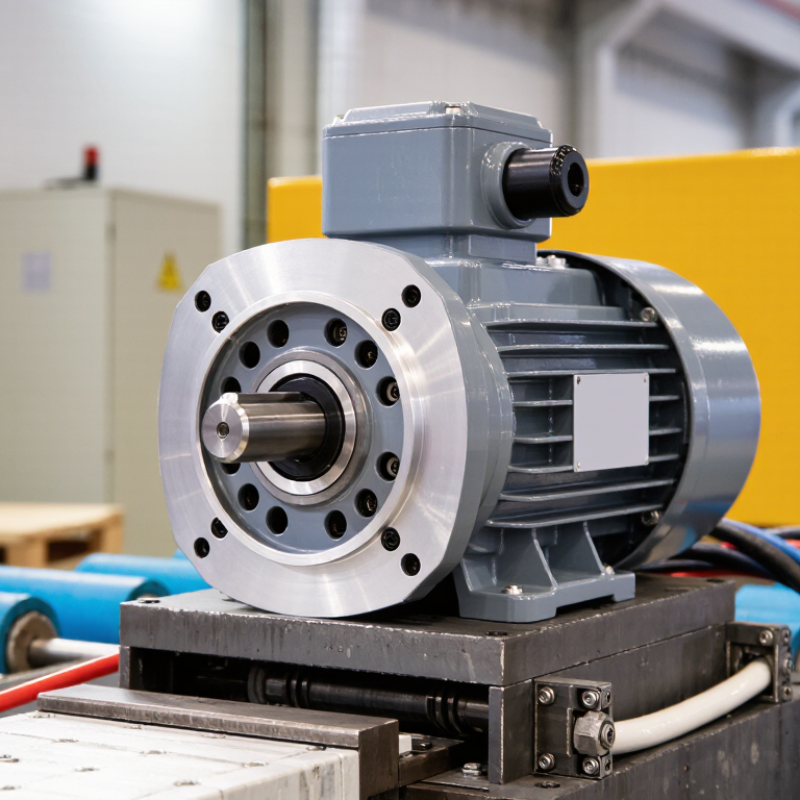
A China three-phase gear motor combines a three-phase electric motor with a speed-reducing gearbox. It converts electrical power into controlled rotary torque for conveyors, mixers, hoists, pumps, and packaging lines. “China” describes the manufacturing origin, not one fixed design. The unit may use an induction or permanent-magnet motor, helical, bevel, worm, or planetary gearing.
Typical industrial models support 380 or 400 volts at 50 hertz. Common specifications include IE3 or IE4 efficiency, IP55 protection, S1 continuous duty, and gear ratios from 5:1 to above 300:1. The gearbox increases output torque while lowering speed. Engineers must check starting torque, service factor, thermal limits, shaft load, lubrication, and brake requirements. A compact housing does not guarantee adequate cooling.
The International Energy Agency reports that electric motor systems consume more than 40% of global electricity. Its Energy Efficiency 2023 report also identifies motor efficiency as a major industrial saving opportunity. That makes correct sizing more important than choosing the highest rated power. IEC 60034 supports motor performance testing, while ISO 6336 helps evaluate cylindrical gear strength. In practice, published data may be incomplete. I would request efficiency curves, noise readings, temperature-rise results, and test conditions before approval. One overlooked detail can cause overheating, vibration, or poor starting performance.
A three-phase gear motor combines an induction motor with a reduction gearbox. Three stator currents arrive 120 electrical degrees apart. They create a rotating magnetic field inside the motor. The rotor follows this field, but never reaches its exact speed. That small difference is called slip, and it produces torque.
The gearbox then reduces speed and increases usable torque. For example, a 1,450 rpm motor with a 29:1 ratio may deliver about 50 rpm, before minor losses. The IEA reports that electric motor systems consume roughly half of global electricity. Efficiency therefore matters. IEC 60034-30-1 defines motor efficiency classes, including IE3 and IE4. A higher class can reduce operating losses, but purchase price and cooling conditions still deserve attention. The “best” China three-phase gear motor depends on load, duty cycle, ratio, mounting, voltage, and required protection.
Tips: Check rated torque, not only motor power. Confirm the gearbox service factor for starting loads. For dusty or wet areas, review the IP rating carefully. Measure actual current during commissioning. A nameplate calculation can look correct, yet real loads may fluctuate. I have seen undersized gearboxes overheat during repeated starts. That detail is easy to miss. Choose a supplier that provides test records, efficiency data, insulation class, and clear dimensional drawings. Also question unusually high efficiency claims; independent verification is safer than a polished catalogue.
The best China three-phase gear motor depends on load, speed, space, and duty cycle. Helical gear motors suit conveyors, mixers, and packaging lines. Their parallel tooth engagement usually supports quiet running and strong transmission efficiency. Bevel-helical units change the drive direction at 90 degrees. They work well where floor space is limited. Worm gear motors offer compact right-angle mounting and useful self-locking behavior, but their sliding contact can create more heat and lower efficiency. Planetary gear motors deliver high torque in a small housing. They are valuable for lifting, robotics, and repeated acceleration.
The International Energy Agency reports that electric motor systems consume more than half of global electricity. That figure makes efficiency more than a catalog detail. IEC 60034-30-1 defines IE efficiency classes, while IE3 and IE4 motors can reduce operating losses during long shifts. China-made units should show rated torque, service factor, insulation class, thermal protection, and test conditions. Ask for the actual efficiency curve. Not only the headline value.
I have seen a motor appear oversized, yet stall under frequent starts. The gearbox ratio was correct, but the starting torque was ignored. That mistake is common. Check reflected inertia, ambient temperature, lubrication, and inverter compatibility before selecting the housing. A worm unit may be cheaper initially. A helical or planetary design may cost less over years of continuous operation. Catalog figures are not the factory floor. Testing under the real load remains the safer judgment.
What Is the Best China Three Phase Gear Motor?
How to Compare Performance, Quality, and Cost
Choosing the best China three phase gear motor requires more than checking its purchase price. I compare rated torque, output speed, motor efficiency, and service factor against the machine’s real workload. A unit rated for 1,500 rpm may not suit a conveyor needing steady low-speed force. Measure the load, starting frequency, running hours, and available voltage before requesting quotations.
Quality becomes clearer through physical details. I inspect gear alignment, shaft finish, bearing movement, terminal protection, and housing strength. A suitable IP rating matters in dusty workshops or damp production areas. Insulation class, thermal protection, and documented test results also deserve attention. Ask for noise readings and efficiency data under realistic loads, not only laboratory conditions. Small details count.
Cost comparison should include installation, energy use, spare parts, and downtime. A cheaper motor can become expensive when seals wear quickly or replacement gears are difficult to source. My early comparisons focused too heavily on the invoice price. That was a mistake. I now request drawings, maintenance instructions, warranty terms, and sample test records before approval. Still, documents can look perfect while factory consistency varies. A trial order, measured temperature check, and several weeks of operation provide stronger evidence than promises alone. The best choice balances verified performance, practical durability, and predictable ownership cost.
What Is the Best China Three Phase Gear Motor?
How to Choose the Best Gear Motor for Your Application
Choosing the best three phase gear motor starts with the application, not the country of manufacture. Measure the required output torque, speed, duty cycle, and starting load. Measure the load first. A conveyor carrying 300 kilograms needs different protection than a small packaging machine. I usually calculate torque from the load and drum radius, then add a practical service factor. However, oversized motors waste energy and may create unnecessary starting stress.
Check the motor’s voltage, frequency, insulation class, enclosure rating, and mounting position. Dust, washdown water, and high ambient heat can shorten service life quickly. For continuous operation, confirm the gearbox ratio and thermal capacity under real working conditions. Helical gears often provide efficient, steady transmission, while worm gears may offer compact installation and useful reduction ratios. Their efficiency can be lower, though. This detail is easy to miss.
Ask for performance curves, dimensional drawings, noise data, and factory test records before ordering. Reliable documentation should match the actual model, not a similar product. Confirm shaft tolerances, brake requirements, starting frequency, and spare-part availability. I once focused too heavily on rated torque and overlooked frequent reversing, which increased wear. The selection was technically acceptable, but not ideal. A small pilot test can reveal vibration, temperature rise, and alignment problems that calculations fail to show.
| Gear Motor Type | Typical Gear Ratio | Typical Efficiency | Typical Output Torque Range | Main Advantages | Common Limitations | Suitable Applications |
|---|---|---|---|---|---|---|
| Helical Gear Motor | Approximately 3:1 to 100:1 | About 90% to 97%, depending on ratio and size | Approximately 50 to 20,000 N·m | High efficiency, compact inline construction, low operating noise, and reliable continuous-duty performance | Usually requires a separate brake or special output arrangement when rapid stopping or holding is required | Conveyors, packaging equipment, material-handling systems, mixers, and general industrial machinery |
| Bevel-Helical Gear Motor | Approximately 3:1 to 200:1 | About 94% to 98% for many industrial configurations | Approximately 200 to 50,000 N·m | High torque density, excellent efficiency, and flexible right-angle mounting | Higher purchase cost and more complex construction than basic worm gear units | Heavy-duty conveyors, cranes, lifts, process lines, and machines with limited installation space |
| Worm Gear Motor | Approximately 5:1 to 100:1 per stage | About 50% to 90%, with efficiency generally decreasing at higher ratios | Approximately 20 to 10,000 N·m | Low cost, quiet operation, compact right-angle design, and high reduction in a single stage | Lower efficiency, greater heat generation, and possible back-driving depending on the ratio and load | Small conveyors, gates, feeders, positioning equipment, and applications with moderate duty cycles |
| Planetary Gear Motor | Approximately 3:1 to 100:1 per stage | About 95% to 98% per stage | Approximately 100 to 100,000 N·m | Very high torque density, excellent load sharing, high stiffness, and precise speed transmission | Higher cost, tighter manufacturing requirements, and more demanding maintenance procedures | High-load automation, servo systems, extruders, lifting equipment, and precision machinery |
| Selection Factor | Recommended Specification or Calculation | Why It Matters | Practical Check Before Ordering |
|---|---|---|---|
| Required Output Speed | Define the required speed in revolutions per minute (r/min). The approximate ratio is: Gear Ratio = Motor Speed ÷ Required Output Speed. | The gear ratio determines the final speed, torque multiplication, and operating efficiency. | Confirm both the rated motor speed and the actual output speed under load, not only the no-load speed. |
| Required Output Torque | For rotating loads: Torque (N·m) = 9,550 × Power (kW) ÷ Speed (r/min). Select a service factor suitable for the load. | Insufficient torque can cause overheating, stalling, tooth damage, or premature bearing failure. | Include starting torque, acceleration torque, shock loads, and the recommended safety margin. |
| Motor Power | Common three-phase motor ratings range from approximately 0.12 kW to more than 200 kW, depending on the equipment. | Power must be sufficient for the load while avoiding unnecessary oversizing and energy consumption. | Compare the calculated power requirement with the motor's rated continuous output and overload capability. |
| Duty Cycle | For continuous industrial operation, specify an appropriate continuous-duty rating such as IEC duty type S1. | Starting frequency, operating hours, and load variation affect thermal performance and service life. | State operating hours per day, starts per hour, load pattern, and whether the motor reverses frequently. |
| Power Supply | Specify the voltage, frequency, phase, and connection required by the installation, such as 380–415 V, 50 Hz, three phase. | Incorrect voltage or frequency can cause excessive current, reduced torque, overheating, or failure to start. | Match the motor nameplate data with the available electrical supply and any variable-frequency drive. |
| Ingress Protection | IP55 is commonly used for general industrial motors; higher protection may be needed for dust, water jets, or washdown areas. | The enclosure rating protects the motor against solid particles and water ingress. | Assess dust, humidity, cleaning methods, outdoor exposure, and the required IP rating for the complete assembly. |
| Mounting and Output Shaft | Specify foot, flange, or shaft-mounted construction, along with shaft diameter, keyway, orientation, and mounting dimensions. | Mechanical compatibility is essential for safe installation and correct load transfer. | Check the mounting drawing, shaft overhung load, radial load, axial load, and available installation space. |
| Brake Requirement | Use an electromagnetic brake when the load must stop quickly or remain held when power is removed. | A standard gear motor does not automatically provide safe load holding or emergency stopping. | Confirm brake torque, release voltage, stopping time, duty frequency, and whether a secondary safety device is required. |
| Variable-Frequency Drive Compatibility | For speed control, select a motor designed for inverter operation and verify the permitted frequency range. | Low-speed operation can reduce cooling and may affect insulation, bearings, and gearbox lubrication. | Check minimum speed, cooling method, overload capacity, cable requirements, and whether an encoder is needed. |
| Noise and Vibration | Helical and bevel-helical units generally offer smoother and quieter operation than many basic worm units. | Noise and vibration affect operator comfort, product quality, bearing life, and machine reliability. | Request measured noise data, balancing information, permissible vibration values, and installation instructions. |
| Service and Maintenance | Follow the specified lubricant type, oil quantity, inspection interval, and replacement procedure. | Correct lubrication reduces gear wear, bearing damage, heat generation, and leakage. | Verify lubricant grade, ambient-temperature range, drain and breather locations, seals, spare parts, and technical support. |
| Standards and Documentation | Request documentation covering motor performance, dimensions, wiring, efficiency, safety, and applicable IEC requirements. | Complete documentation supports correct installation, compliance, troubleshooting, and future replacement. | Obtain the nameplate drawing, performance curve, efficiency data, test report, warranty terms, and installation manual. |
Three electrical currents arrive 120 degrees apart. They create a rotating magnetic field. The rotor follows slightly behind, creating slip and torque. The gearbox then reduces speed and increases usable torque.
A 29:1 ratio greatly lowers output speed. A 1,450 rpm motor may produce about 50 rpm. Small mechanical losses reduce the final speed slightly. The output torque increases after reduction.
Compare rated torque, output speed, efficiency, and service factor. Do not compare power alone. Check starting loads and running hours. A conveyor may need steady force at low speed.
Motor systems use a large share of global electricity. Higher efficiency can reduce operating losses. Purchase price still matters. Cooling conditions may change real performance.
Measure load weight, output speed, torque, and starting frequency. Record available voltage and frequency. Check the drum radius when calculating conveyor torque. Measure the load first.
Dust, water, and high ambient heat can shorten service life. Review the enclosure rating carefully. Check insulation class and thermal protection. A damp workshop needs stronger protection than a clean room.
Inspect gear alignment, shaft finish, bearings, and housing strength. Check shaft tolerances and mounting dimensions. Ask for noise readings and test records. Small details count.
Include installation, electricity, spare parts, and possible downtime. A cheaper unit may need frequent seal replacement. Replacement gears may also be difficult to source. My earlier comparisons focused too much on invoices. That was a mistake.
A short trial can reveal vibration, heat, and alignment problems. Measure current during commissioning. Check temperature after repeated starts. Calculations can miss changing loads.
A China Three Phase Gear Motor is an integrated power transmission unit that combines a three-phase electric motor with a gearbox to deliver reliable torque at a controlled speed. It is widely used in conveyors, mixers, packaging equipment, lifting systems, and other industrial machinery. By using three-phase electrical power, the motor can achieve smooth rotation, stable performance, and efficient operation. The gearbox then adjusts speed and torque according to the needs of the application.
Common types include helical, worm, bevel, and planetary gear motors, each offering different benefits in efficiency, compactness, torque capacity, and installation flexibility. When comparing options, buyers should evaluate rated power, output speed, torque, efficiency, noise, materials, protection level, service life, and total cost rather than focusing only on the purchase price. The best gear motor should match the machine’s load, operating cycle, mounting arrangement, environmental conditions, maintenance requirements, and safety standards. A careful technical comparison helps ensure dependable performance and long-term value.
