RSI Motors
Choosing the right Heavy Duty Gear Motor supplier in 2026 requires more than comparing catalog prices. Buyers need dependable torque, thermal capacity, sealing performance, and local technical support. A motor may survive a factory test yet fail beside a dusty conveyor, a wet crusher, or a continuously loaded hoist.
Industry forecasts show strong demand for industrial gear systems. Grand View Research estimates the global industrial gearbox market will continue expanding through 2030, supported by automation, material handling, renewable energy, and process manufacturing. MarketsandMarkets also identifies rising investment in efficient drive systems and connected industrial equipment. These reports offer useful direction, but their market boundaries differ. Forecasts disagree.
The U.S. Department of Energy has repeatedly highlighted the importance of motor-system efficiency in industrial electricity use. Therefore, a supplier’s value should include lifecycle consumption, not only purchase cost. Buyers should examine rated output torque, service factor, gearbox materials, lubricant options, IP protection, overload behavior, and replacement lead times. A clear warranty matters. So does field experience.
Reliability specialist Heinz P. Bloch emphasized a practical principle: “Reliability is designed in, not inspected in.” That lesson applies directly to gear motors. Supplier selection should begin with application data, including load cycles, ambient temperature, shock loads, mounting position, and maintenance access. A ranking can still mislead. The cheapest unit may create expensive downtime.
This guide evaluates leading global suppliers through engineering capability, manufacturing consistency, customization, documented testing, after-sales service, and regional availability. It also recognizes an uncomfortable reality: no supplier is ideal for every application. The strongest choice is the one that matches the machine, environment, and operating risk.
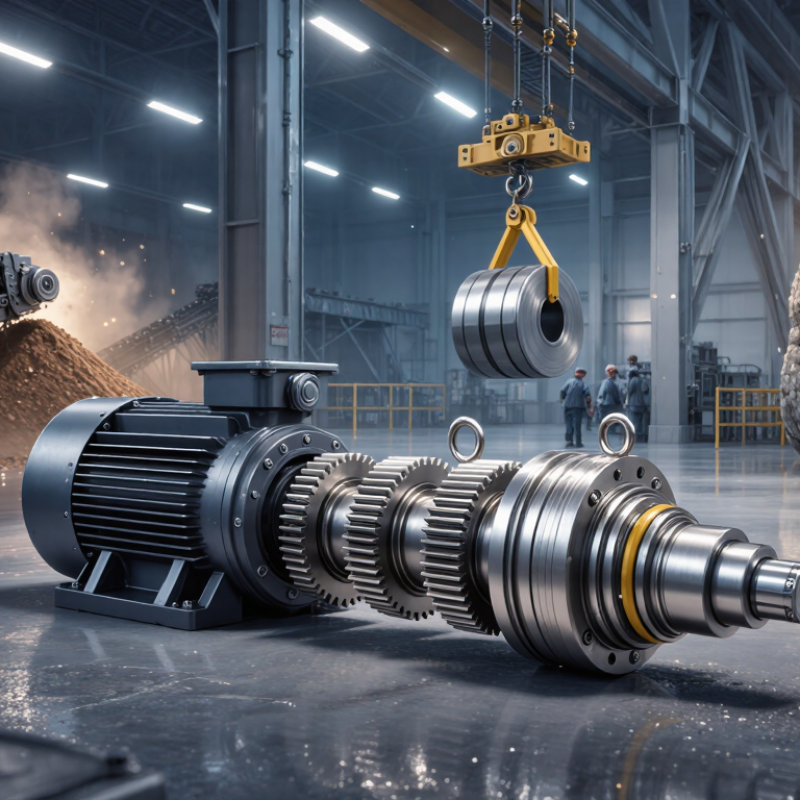
Heavy-duty gear motors must match real load conditions, not only catalog ratings. Torque depends on motor power, gearbox ratio, and service factor. A 30 kW motor with a 20:1 ratio may deliver strong output torque, but startup loads can still exceed the gearbox limit. In field applications, dust, shock loads, and frequent reversing often expose weak selections. I have found that rated torque alone gives an incomplete picture.
Gear ratios control speed, pulling force, and operating stability. Low-speed conveyors usually need higher ratios and careful thermal checks. IE3 motors offer reliable efficiency for many industrial systems. IE4 motors can reduce energy losses further, especially during long operating hours. However, IE4 designs may require compatible drives, better cooling, and higher initial investment. The most efficient motor is not always the best system choice. That point deserves more attention.
Tips: Confirm peak torque, not only nominal torque. Check gearbox efficiency at the selected ratio. Measure daily running hours before comparing IE3 and IE4 payback. Ask suppliers for test data, temperature limits, noise values, and overload capability. Leave room for uncertainty. Real machines rarely behave perfectly. A slightly conservative service factor may prevent expensive downtime, but excessive sizing can increase energy use and purchase cost.
Global buyers are entering 2026 with a practical question: which gear motor configuration fits the site, not just the catalog? The International Energy Agency reports that electric motor systems consume about 45% of global electricity. Efficiency and service life therefore deserve equal attention. Helical gear motors suit continuous conveyor duty and higher efficiency. Worm gear motors offer compact reduction, but may lose more energy through sliding contact. Bevel-helical units provide strong torque transfer where layouts change direction. Planetary designs handle high torque in limited spaces. The choice is rarely universal.
IEC frame compatibility can simplify replacement planning. Buyers should verify frame size, shaft height, mounting form, terminal position, and rated duty. IEC 60034-5 defines enclosure protection through the IP code. IP55 protects against dust that may impair operation and low-pressure water jets. IP66 provides stronger dust protection and resistance to powerful water jets. A 2024 industrial motor market analysis by Fortune Business Insights identifies automation, material handling, and process equipment as major demand areas. These sectors often expose motors to washdown, dust, vibration, and frequent starts.
IP66 is not automatically better for every installation. It can increase cost and sometimes complicate thermal management. IP55 may perform reliably inside a clean, sheltered plant. That assumption can fail near salt spray or aggressive cleaning routines. Supplier audits should review test certificates, temperature-rise data, sealing design, spare-part access, and actual field references. Published efficiency figures also need context; gearbox losses and operating cycles can change the result. The Global Energy Agency’s motor-system findings make one point clear: small design decisions can create large lifetime energy differences.
2026 Top Heavy Duty Gear Motor Suppliers for Global Buyers?
A serious 2026 supplier review begins with ISO 9001, not a polished catalog. The ISO Survey 2023 recorded more than 1.26 million ISO 9001 certificates worldwide. That figure shows reach, not product quality. Buyers should verify certificate scope, audit status, corrective actions, and factory process records. Ask for traceable inspection data on gears, shafts, seals, and housing alignment. Small gaps matter.
AGMA ratings provide a stronger technical comparison. Request the exact AGMA standard, rating method, service factor, hardness range, and allowable torque. “Heavy duty” is not a rating. Gear capacity should match speed, shock loading, duty cycle, lubrication, and thermal limits. A motor may survive a short overload but fail under continuous heat. That difference is often missed.
ISO 281 L10 life adds measurable bearing discipline. L10 means a calculated life with 90% reliability, based on load, speed, material, and lubrication assumptions. It is not a guaranteed operating period. Suppliers should disclose dynamic load ratings, equivalent loads, contamination factors, and the duty profile used. The IEA reports that motor-driven systems consume nearly half of global electricity, making efficiency and service life commercially important. Still, calculation sheets can look precise while using optimistic loads. A useful evaluation includes test evidence, field feedback, and a clear explanation of what the model cannot predict.
Indicative engineering comparison based on ISO 281 basic rating-life calculations for a deep-groove ball bearing at 1,500 rpm. L10 life is calculated as L10 = (C/P)3 million revolutions for ball bearings. ISO 9001 and AGMA ratings should be verified through current certificates, test reports and product documentation during supplier qualification.
Assumption: constant radial load, steady speed, normal operating conditions and no contamination-related reduction. ISO 281 L10 represents the life at which 90% of an equivalent bearing population is expected to remain operational under the stated conditions; it is not a guaranteed service life.
For global buyers, a heavy duty gear motor shortlist should begin with the application, not the catalog. Mining drives need high shock resistance, sealed housings, and stable torque under dusty conditions. Conveyor systems require dependable starts, accurate speed control, and easy access for planned maintenance. Cranes add another concern: holding brakes must manage suspended loads safely during frequent stops.
Suppliers with proven field experience should provide continuous-duty S1 ratings for true 24/7 operation. Ask for thermal calculations, duty-cycle assumptions, gearbox efficiency data, and documented load testing. A suitable unit should match the conveyor’s pull, drum speed, ambient temperature, and starting frequency. Look for corrosion protection, suitable ingress protection, and lubrication guidance for long service intervals. Details matter.
For mining installations, request references from comparable climates and material-handling conditions. A supplier’s engineering team should explain shaft loads, mounting tolerances, backlash, and emergency-stop behavior in clear language. Cranes may need fail-safe braking, manual release options, and inspection access. Do not rely on rated torque alone. It can hide poor starting performance.
A supplier can pass every paper test and still disappoint on site. Packaging, spare-part availability, and response time deserve equal attention. Factory acceptance testing helps, but it cannot replace installation checks. Even experienced buyers sometimes overlook alignment. That mistake becomes expensive quickly. Expect clear drawings, traceable test records, and practical support after delivery.
| Anonymous supplier profile | Primary application fit | Typical gearbox architecture | Typical motor power | Typical output torque | Typical ratio range | Duty and protection | Useful buyer differentiators |
|---|---|---|---|---|---|---|---|
| Profile A — Mining Conveyor Specialist | Overland conveyors, crushers, feeders, bulk-material handling | Helical-bevel or parallel-shaft helical gear motor | 15–500 kW | 5,000–250,000 N·m | 4:1–400:1 | S1 continuous duty; IP55–IP66; Class F insulation commonly available | Low-speed high-torque packages, backstops, temperature monitoring, oil cooling |
| Profile B — Heavy Conveyor Integrator | Belt conveyors, screw conveyors, bucket elevators, logistics lines | Inline helical or parallel-shaft helical gear motor | 0.75–250 kW | 800–100,000 N·m | 3:1–300:1 | S1 operation; IP55 standard, IP65/IP66 for washdown or dusty areas | Flexible mounting, hollow-shaft options, brake integration, inverter-ready motors |
| Profile C — Crane and Hoist Drive Specialist | Bridge cranes, gantry cranes, hoists, trolley and travel mechanisms | Helical, bevel-helical, or compact planetary gear motor | 1.5–315 kW | 1,000–120,000 N·m | 5:1–500:1 | S1 for travel drives; intermittent crane duty may require duty-class selection and brake validation | Fail-safe brakes, low backlash, overload capacity, encoder and limit-switch compatibility |
| Profile D — High-Torque Planetary Supplier | Stacker-reclaimers, ship loaders, rotary equipment, large winches | Planetary or helical-planetary gear unit with separate motor | 30–1,000 kW | 20,000–1,000,000 N·m | 10:1–1,000:1 | S1 continuous duty; IP55–IP66; forced lubrication or cooling may be required | High torque-to-weight ratio, modular stages, radial-load capacity, condition monitoring |
| Profile E — Harsh-Environment Gear Motor Supplier | Outdoor mining, ports, steel plants, wastewater and corrosive areas | Sealed helical-bevel or parallel-shaft gear motor | 0.37–200 kW | 500–80,000 N·m | 4:1–250:1 | S1 continuous duty; IP66 options; ambient ratings commonly around −20°C to +40°C without special derating | C5 corrosion-protection options, breather arrangements, anti-condensation heaters, paint systems |
| Profile F — Retrofit and Replacement Specialist | Existing conveyor, mixer, crane and process-equipment replacements | Inline, bevel, worm, or parallel-shaft replacement unit | 0.12–160 kW | 100–50,000 N·m | 5:1–2,000:1, depending on gear type | S1 configurations available; IP55 typical, higher protection by specification | Dimensional interchangeability, shaft and flange customization, rapid engineering review |
| Profile G — IEC Motor and Variable-Speed Package Supplier | Continuous-process lines, pumps, fans, conveyors and automated material handling | IEC motor with helical or bevel gearbox and variable-frequency drive | 0.12–500 kW | 100–200,000 N·m | 3:1–500:1 | S1 duty; IEC 60034-1 motor ratings; IP55–IP66; inverter-duty options | Integrated drive setup, energy-efficiency options, braking resistors, diagnostics and remote monitoring |
Global buyers should compare total cost of ownership, not only the quoted gear motor price. TCO includes energy use, installation, freight, import duties, spare parts, and planned maintenance. Downtime can cost more than the motor itself. Request a five-year cost model with clear assumptions. Some suppliers provide impressive prices but weak service records.
Lead time needs practical verification. Ask for production capacity, testing time, packing schedules, and document release dates. Confirm whether the quoted lead time starts after payment, drawing approval, or order confirmation. Build a small buffer. Delays happen. A factory visit, video inspection, or third-party audit can reveal process gaps that brochures hide. Request sample inspection reports, load-test data, and serial-number traceability.
Compliance must match the destination and application. For European shipments, verify the applicable CE conformity documents, technical file support, and risk assessment. For North American projects, check whether UL certification or recognition fits the complete assembly. Do not accept a logo alone. Ask for certificate scope, standard numbers, and issuing-body details. Warranty terms should state duration, coverage, labor responsibility, replacement timing, and exclusions. Clarify whether incorrect alignment, overload, moisture, or poor lubrication voids coverage. A responsive supplier should answer these questions in writing. That record matters. My own purchasing reviews often find one weakness: warranty promises sound strong until transport damage and commissioning support are discussed. Get those details settled before the purchase order.
Catalog ratings can hide real operating stress. Check peak torque, startup force, shock loads, dust, vibration, and reversing frequency. Rated torque is incomplete.
The ratio controls output speed, pulling force, and operating stability. Higher ratios suit slow conveyors, but thermal checks remain necessary. More reduction is not always better.
No. Compare nominal torque with peak torque and startup demand. A 30 kW motor may still exceed gearbox limits during acceleration. Leave safety margin.
IE3 suits many industrial systems with dependable efficiency. IE4 can reduce losses during long operating hours. It may need compatible drives, improved cooling, and higher investment.
Helical units suit continuous conveyors and efficient operation. Worm units are compact but may lose more energy. Bevel-helical units handle changed directions. Planetary units fit high torque in tight spaces.
IP55 suits clean, sheltered areas with limited water exposure. IP66 offers stronger dust and water protection. Check washdown routines, salt spray, cooling, and actual site conditions.
Matching frame size can simplify replacement. Verify shaft height, mounting form, terminal position, and rated duty. A similar-looking frame may still fail during installation.
Do not rely on a polished catalog. Check quality certificates, audit status, corrective actions, and factory records. Request traceable inspections for gears, shafts, seals, and housing alignment.
Gear ratings should show allowable torque, hardness, service factor, speed, lubrication, and thermal limits. L10 life predicts when 90% of similar bearings may survive. It is not a guarantee.
Request test data, temperature limits, noise values, overload capability, efficiency details, spare-part access, and field references. Ask what the calculations cannot predict. Models can look precise.
This guide to the 2026 Heavy Duty Gear Motor market explains how torque capacity, gear ratios, and IE3/IE4 efficiency classes affect performance, energy use, and operating costs. It compares common gear designs, IEC frame compatibility, and IP55/IP66 protection levels for demanding environments such as mining, conveyors, cranes, and continuous S1-duty applications. Buyers will also learn how to assess suppliers through ISO 9001 quality systems, AGMA load ratings, and ISO 281 L10 bearing-life calculations.
The supplier evaluation framework emphasizes practical purchasing factors, including total cost of ownership, production capacity, lead times, maintenance support, warranty terms, and documentation. It also highlights the importance of verifying CE or UL compliance where applicable, confirming installation requirements, and matching motor specifications to actual loads and duty cycles. By using these criteria, global buyers can build a reliable shortlist and select efficient, durable gear motor solutions for long-term industrial operation.
